Norse Symbols
Beyond the runes themselves, Norse and Icelandic tradition carries a wider family of symbols — Viking-age memorial signs, mythological figures from the Eddas, magical staves from the Icelandic grimoires. Twelve, treated honestly: what each is, where it comes from, what it means now.
What Are Norse Symbols?
"Norse symbols" is a casual umbrella term — the dozen below cluster around shared roots in Norse, Germanic, and Icelandic culture, but they come from very different periods and contexts. Most rival pages flatten that into a generic "ancient Viking" claim. We separate it out.
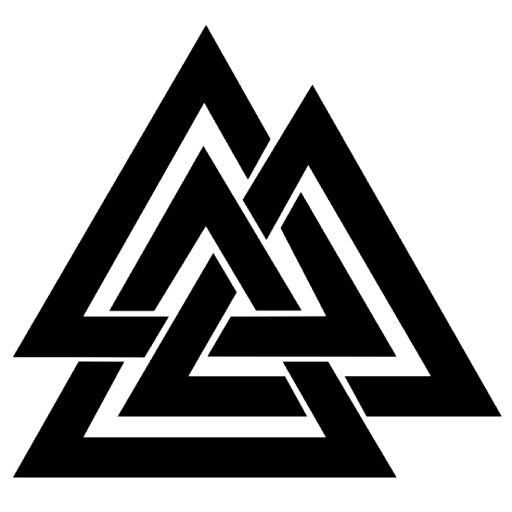
Some are genuinely Viking-age in the strict sense: they appear on artefacts dated 8th–11th c., on memorial stones, weapon-pendants, and picture-stones. Mjolnir, the Valknut, and the Triple Horn fall here.
Some are mythological figures — gods' tools, sacred animals, the world-tree itself. They live in the stories first; their visual depictions begin in Viking-age picture-stones and continue through the Eddas (the 13th-c. Icelandic compilations of older Norse myth) and onward.
Some are magical sigils from the post-Viking Icelandic grimoire tradition — the Aegishjalmur and Vegvisir, written down in manuscripts of the 17th–19th centuries. They are Norse in cultural lineage but not Viking-age in date. One — the Web of Wyrd — is genuinely modern, a 20th-century neopagan invention. We include it because the underlying concept (wyrd, fate as woven thread) is deeply Norse, even if the graphical symbol is not.
Each page below treats its symbol with that distinction in mind.
Viking-Age Symbols
Three symbols genuinely from the Viking Age — found on memorial stones, weapon-hilts, and pendants from 8th–11th-century Scandinavia. The archaeology is solid; the dating is clear.


Mythological Figures
Six figures from Norse mythology — gods' tools, sacred animals, and the world-tree itself. Their stories are recorded in the Eddas; their visual depictions begin on Viking-age picture-stones and continue through medieval Icelandic manuscripts.






Magical Sigils
Three magical signs — two from the post-Viking Icelandic grimoire tradition, one a 20th-century neopagan invention. All are widely worn today; their histories differ. The pages explain.



How These Symbols Are Used Today
All twelve symbols above are widely worn or used in some form today — as pendants, tattoos, doorpost markings, talismans, identifiers. The Mjolnir pendant is the primary identifier of modern Heathens (Norse pagans) the way a cross identifies Christians. The Vegvisir is among the most-tattooed symbols in the world, even by people with no Norse interest beyond the aesthetic. The Valknut and Triple Horn appear on Heathen altars, vehicles, and jewellery; Yggdrasil and the mythological figures show up in books, games, films, and tattoos that draw on Norse mythology more broadly.
The cultural tradition is generally not considered closed in the way some others are — Norse magic was never centrally controlled and has always been adapted by the people who carried it. Wear what speaks to you. The site recommends understanding what you wear; that is what these pages are for.