World TreeNorse CosmologyNine WorldsAxis MundiOdin's Sacrifice
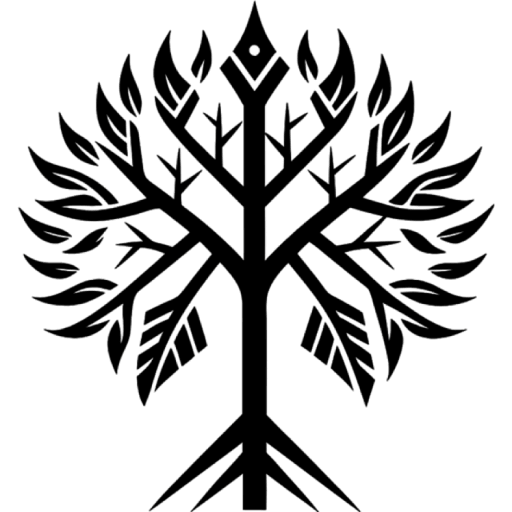
Yggdrasil, the immense World Tree, stands at the heart of Norse cosmology, connecting the Nine Worlds through its vast branches and deep roots. It is a symbol of interconnection, wisdom, and the axis upon which all things revolve.
What is the Yggdrasil?
Yggdrasil is a mighty ash tree, towering and ancient, whose branches extend over the entire cosmos, while its roots delve deep into different realms. In Norse mythology, it serves as the axis mundi, a central point connecting all of existence: from the heights of Asgard to the depths of Hel, and all realms between.
The name 'Yggdrasil' is often translated as 'Odin's horse,' a poetic reference to the gallows-tree from which Odin hung himself for nine nights. This tree is more than a symbol of life; it is a profound depiction of sacrifice, transformation, and the quest for wisdom.
Origin & History
Yggdrasil is prominently featured in the Poetic Edda and the Prose Edda, foundational texts of Norse mythology. In 'Grímnismál,' a poem from the Poetic Edda, Yggdrasil is described as the greatest and most holy of trees, with its branches stretching across the heavens and its roots reaching into the most profound depths.
The tree's three main roots connect to different realms and wells: one to Asgard, residing over Urd's well, where the Norns weave the fate of all; another to Jotunheim, reaching Mimir's well, the source of immense wisdom; and the third to Niflheim, descending to the well of Hvergelmir, the origin of all rivers. This symbolic structure forms the backbone of Norse cosmology, representing the interconnectedness of all things.
As a genuinely Viking-Age concept, Yggdrasil is deeply embedded in Scandinavian culture, with references found in archaeological artifacts and medieval manuscripts. Unlike many symbols later conflated or revived, Yggdrasil's roots lie firmly in the pre-Christian Norse tradition.
The Nine Worlds and Three Roots
Yggdrasil, the World Tree, is the living axis of the cosmic structure that binds the Nine Worlds. Its roots extend into the three fateful wells: Urd's well in Asgard, where the Norns inscribe the destiny of gods and men; Mimir's well in Jotunheim, offering boundless wisdom but at great personal sacrifice, as exemplified by Odin's quest for knowledge; and Hvergelmir in Niflheim, the bubbling source of primordial rivers and a realm of primal energies.
Inhabitants of Yggdrasil include the eagle that sits at its pinnacle, observing all below, and the dragon Niðhöggr, who gnaws at its roots, embodying the cyclic nature of creation and destruction. The mischievous squirrel Ratatoskr scurries between the eagle and Niðhöggr, spreading messages of agitation — a reminder of the dynamic forces at play within the universe.
Four stags graze on the tree's leaves, representing the changing seasons and the cycle of life. Yggdrasil itself is a microcosm of the cosmos, each interaction among its inhabitants echoing the eternal balance and conflict inherent in the Norse worldview.
Modern Meaning & Use
In modern times, Yggdrasil is revered in neopagan and Norse reconstructionist circles as a potent symbol of interconnectedness and spiritual ascent. Its imagery is commonly found in tattoos, jewellery, and art representing the eternal interplay between life, death, and rebirth.
Despite its ancient origins, the World Tree continues to inspire interpretations that resonate with contemporary seekers. For some, it signifies the ecological balance and the deep roots shared by all living things, while for others, it serves as a metaphorical journey toward enlightenment and self-discovery.
Working with Yggdrasil
Yggdrasil serves as a profound symbol of connection and wisdom. Engaging with the World Tree can deepen your understanding of the Norse cosmos and your place within it.
Meditate under it. Visualize yourself beneath Yggdrasil, feeling the flow of its roots and branches connecting you to the Nine Worlds.
Illustrate it. Create your own depiction of the World Tree, incorporating elements that speak to your personal journey and insights.
Wear it. Adorn yourself with Yggdrasil-themed jewellery to carry the tree's wisdom and balance with you daily.
Reflect on its symbolism. Contemplate the stories of Odin's sacrifice and the interplay of creatures within Yggdrasil for personal growth.
Honor it in nature. Spend time in natural settings, acknowledging the interconnectedness of all life as mirrored in the World Tree.
Whatever your engagement with Yggdrasil, approach it with respect and curiosity. Allow the tree to guide you towards a deeper understanding of your life's path and the complex web of existence. Your intention will shape your experience as the World Tree reveals its mysteries to you.
Frequently Asked
Is Yggdrasil an actual tree in Norse mythology?
Yes, in the myths, Yggdrasil is described as an immense and holy ash tree that forms the central structure of the cosmos, connecting the Nine Worlds.
What are the Nine Worlds connected by Yggdrasil?
The Nine Worlds of Norse cosmology, connected by Yggdrasil, include Asgard, Midgard, Jotunheim, Vanaheim, Alfheim, Svartalfheim, Muspelheim, Niflheim, and Helheim, each representing different realms and dimensions of existence.
How does Yggdrasil relate to Odin's quest for wisdom?
Yggdrasil is the site of Odin's sacrifice, where he hung for nine nights to gain the runes, symbolic of his quest for wisdom and understanding. This act reflects the deep connection between sacrifice, knowledge, and the World Tree.
Are there similar world trees in other mythologies?
Yes, many cultures have a 'world tree' or 'axis mundi' concept, such as the Tree of Life in Kabbalistic tradition or the World Ash in Slavic mythology. These symbols often represent the universe's interconnectedness and the bridge between worlds.
Is Yggdrasil still relevant today?
Absolutely. Yggdrasil continues to be a powerful symbol for understanding the interconnectedness of life, ecological balance, and personal growth. It remains a source of inspiration and reflection for many modern practitioners and enthusiasts.
A Free Rune Reading
Cast Three Runes
Three runes drawn at random from the Elder Futhark, in the shape of the Norns — Urðr, Verðandi, Skuld. The same tradition as Yggdrasil, written in twenty-four signs.