Three TrianglesOdin's KnotWarrior SymbolViking AgeBattle Slain
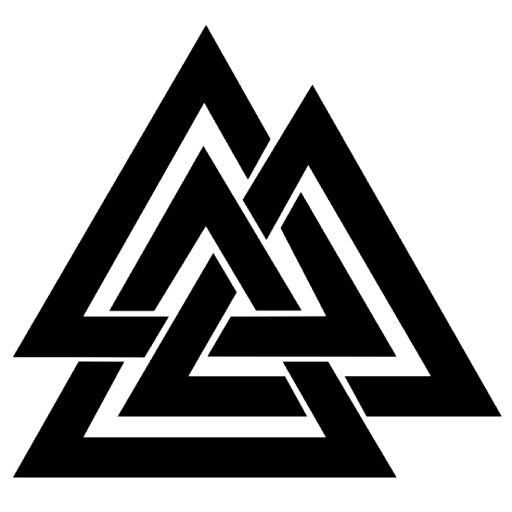
The Valknut, or 'Knot of the Slain', is a striking Norse symbol consisting of three interlocked triangles, resonant with themes of death, battle, and the divine Odin himself. This powerful emblem is found on ancient Viking-age stones, hinting at its deep connection to warriors and the afterlife.
What is the Valknut?
The Valknut consists of three interwoven triangles, forming a distinctive nine-pointed shape. Its structure suggests strength through unity and complexity, reflecting the interconnectedness of life, death, and the divine. Each triangle contributes to a geometry that is both simple and profound, evoking mystery and power.
In essence, the Valknut is regarded as a symbol of warriors who have died honorably in battle. Its association with Odin, the Norse god of war and death, imbues it with additional layers of meaning, suggesting a gateway between worlds, a passage for the heroic dead to the halls of Valhalla.
Origin & History
The Valknut is an authentically Viking-age symbol, appearing on several significant archaeological finds from the Norse period. Perhaps most notably, it can be seen on the Stora Hammars I and Tängelgårda stones from Gotland, dating back to the 9th or 10th century. These stones depict scenes of warrior sacrifice and battle, situating the Valknut squarely within contexts of death and valor.
Despite its ancient origins, the term 'Valknut' is not from the Viking lexicon; it is a modern Norwegian coinage. The symbol itself appears without a known name in historical texts, leading to much speculation about its precise function and meaning. The alignment with Odin and the slain is based largely on contextual inference, given its frequent presence in imagery associated with the god.
The Three Triangles
The Valknut's three interlocked triangles create a symmetry that has inspired various interpretations, both historical and modern. Each triangle contributes to a whole that resonates with the mystical traditions of threefold concepts: life, death, and rebirth; past, present, and future; and the three realms of the Norse cosmos — Asgard, Midgard, and Hel.
In historical contexts, no specific meaning for the nine vertices or the triangle arrangement has been definitively recorded. However, modern interpretations often link the symbol to the idea of the nine worlds within Yggdrasil, suggesting a cosmic unity that connects all beings and planes of existence — a notion resonant with the interconnected triangles.
The Valknut's triadic design speaks to the power of three, a sacred number in many ancient cultures. This triadic symmetry is a poetic representation of balance and interdependence, hinting at a deeper understanding of the cycles of life and the journey beyond.
Modern Meaning & Use
Today, the Valknut is embraced within the neopagan communities as a symbol of strength, sacrifice, and a link to the ancient warrior spirit. It is frequently chosen for tattoos and jewelry, signifying a connection to Norse heritage, the honour of battle, or personal transformation.
However, the Valknut has also been co-opted by some white-supremacist groups, a misuse that has tainted its image in certain contexts. This appropriation can make its public display controversial, particularly when used without an informed understanding of its history and symbolism. As with many symbols from Norse mythology, the Valknut encourages thoughtful engagement and respect for its origins.
Valknut vs Triple Horn
The Valknut and the Triple Horn of Odin are both powerful symbols within Norse iconography, yet they serve distinct purposes and meanings. The Valknut, with its three interlocked triangles, is closely associated with warriors, Odin, and the afterlife, symbolizing a connection to the valiant dead and the divine power of Odin.
In contrast, the Triple Horn of Odin consists of three interlocked drinking horns, representing Odin's quest for wisdom through the mead of poetry. This symbol emphasizes intellectual pursuit and the divine inspiration granted by the god, rather than the martial themes of the Valknut.
Structurally, the Valknut's geometry evokes themes of interconnection and cyclicality, while the Triple Horn often appears more fluid, highlighting the mead's transforming power and the flow of inspiration. Though both symbols share a common association with Odin, their narratives diverge in focus and intent.
Working with the Valknut
The Valknut offers a profound connection to the themes of death, bravery, and the divine. Engaging with this symbol can be a powerful personal exploration, rooted in ancient warrior traditions.
Wear it. Emblazoned on clothing or jewelry, the Valknut can be worn to invoke the strength and honor of the warriors it represents.
Display it. Place the symbol where it can serve as a daily reminder of the resilience and courage you aim to embody.
Meditate with it. Visualize the interlocking triangles, reflecting on concepts of life, death, and spiritual unity, connecting with the deeper wisdom it offers.
Inscribe it. Carve or draw the Valknut in personal spaces to invite its protective energy and the favor of the old gods.
Tattoo it. As a permanent marker, a Valknut tattoo can serve as a lifelong commitment to personal bravery and dedication to the values it represents.
Approach the Valknut with clear intent, considering the powerful themes it embodies. Whether as a talisman or an artistic expression, charge the symbol with your personal meaning and respect for its storied past. This mindful practice honors the warrior spirit and the mysteries of the cosmos it reflects.
Frequently Asked
Is the Valknut really a Viking symbol?
Yes, the Valknut is genuinely a Viking-age symbol. It appears on several Viking-age stones, such as the Stora Hammars I and Tängelgårda stones, and is associated with scenes of battle and death. While the exact name used during that time is unknown, the Valknut's historical presence is well-attested.
What do the three triangles of the Valknut represent?
Historically, there is no definitive record explaining the meanings of the Valknut's triangles. Modern interpretations vary, suggesting connections to the nine worlds or the three realms of Norse cosmology. The symbol's true power lies in its mystery and the poetic resonance of its interlocking form.
Is the Valknut used by extremist groups?
Unfortunately, the Valknut has been appropriated by some extremist groups, which can make its public display controversial. As with any symbol, it's crucial to understand its history and meaning and to use it with an informed sense of respect and intention.
Can I incorporate the Valknut into personal rituals?
Yes, the Valknut can be integrated into personal spiritual practices as a symbol of courage, sacrifice, and connection to the divine. Whether used in meditation or as a talisman, it can be a meaningful part of your journey.
How can I ensure respectful use of the Valknut?
Respectful use of the Valknut involves understanding its historical context, acknowledging its appropriation by some groups, and using it with intention. Engage with its symbolism thoughtfully, honoring the stories and beliefs it represents.
A Free Rune Reading
Cast Three Runes
Three runes drawn at random from the Elder Futhark, in the shape of the Norns — Urðr, Verðandi, Skuld. The same tradition as the Valknut, written in twenty-four signs.