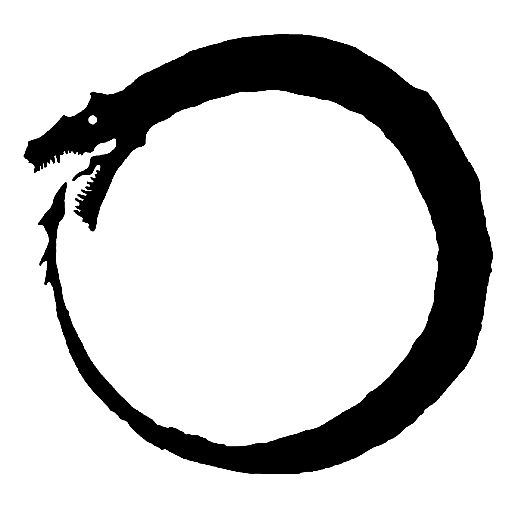
Jormungandr, the Midgard Serpent, is a colossal sea creature from Norse mythology. Prophesied to herald the end of the world, it encircles the earth and remains one of Thor's most formidable adversaries.
What is the Jormungandr?
Jormungandr is a legendary sea serpent of immense proportions, said to encircle the world, known as Midgard, biting its own tail. This global embrace makes it both a literal and symbolic boundary of the world known to the Norse.
The Midgard Serpent is closely associated with the end times, or Ragnarok, where it will rise from the sea, causing tidal waves with its thrashing, and engage in a final, apocalyptic battle with the thunder god Thor.
Origin & History
Jormungandr is deeply embedded in Norse mythology, with references throughout several key sources. It is mentioned in the Poetic Edda, particularly in the 'Hymiskviða,' 'Voluspa,' and the Prose Edda's 'Gylfaginning,' compiled by Snorri Sturluson in the 13th century.
The legend describes Jormungandr as one of the three monstrous children of Loki and the giantess Angrboda, alongside Fenrir, the great wolf, and Hel, ruler of the underworld. In the 'Gylfaginning,' Odin casts the serpent into the ocean surrounding Midgard, where it grows so large that it is able to encircle the earth and grasp its own tail.
This serpent has strong visual echoes with the ouroboros from other traditions, though its symbolism in Norse mythology is primarily apocalyptic rather than cyclical or regenerative. Stone carvings, such as the Hørdum and Altuna stones, further depict its mythological significance.
The World Serpent
The birth of Jormungandr marks the beginning of a cycle of conflict with the gods. Cast into the sea by Odin, it grew until its body encircled the earth, a living boundary and harbinger of fate.
Jormungandr's rivalry with Thor begins at the hall of Útgarða-Loki, where the serpent is disguised as a monstrous cat. Thor, challenged to lift it, manages to raise one of its paws off the ground — a feat of strength beyond mortal scope.
Their next encounter occurs during a fishing expedition with the giant Hymir, as recounted in the 'Hymiskviða.' Thor attempts to catch Jormungandr with a baited line, and as the serpent surfaces, hammer in hand, Thor strikes, but Hymir cuts the line, allowing Jormungandr's temporary escape.
The final meeting between Jormungandr and Thor happens at Ragnarok, the doom of the gods. In this battle, Thor slays the serpent but succumbs to its venom after taking nine steps, fulfilling the prophecy of their mutual destruction.
Modern Meaning & Use
Jormungandr holds a revered place in modern imaginations, often depicted in art, literature, and popular culture. Its image is a popular choice for tattoos, symbolising the vastness of nature and the inevitability of fate.
In contemporary neopagan practices, Jormungandr is sometimes invoked as a symbol of profound change, the boundary between worlds, and the cycle of creation and destruction. The mythological story resonates with themes of facing one's greatest challenges and the transformative power they hold.
Working with Jormungandr
Incorporating Jormungandr into your spiritual practice involves engaging with its rich symbolism and mythological roots. Consider these traditional and modern approaches:
Meditate on it. Visualise the great serpent encircling the world, embodying your boundaries and the cycles you wish to acknowledge.
Draw it. Create artwork of Jormungandr encircling a circle or sphere to symbolise completion and protection.
Wear it. Tattoos or jewellery with the serpent's image can serve as reminders of resilience and the endurance of the spirit.
Read the myths. Familiarise yourself with the Eddic sources where Jormungandr appears, deepening your understanding of its mythological context.
Invoke its energy. In rituals, call upon Jormungandr to symbolise transformation and the courage to face profound change.
As you work with Jormungandr, consider the balance of creation and destruction it represents. Let it guide you in recognising your own cycles and the immense potential within the boundaries of your world.
Frequently Asked
Is Jormungandr really a Viking symbol?
Yes, Jormungandr is an authentic figure from genuine Norse mythology, attested in several Eddic sources such as the 'Gylfaginning,' 'Hymiskviða,' and 'Voluspa,' making it a true Viking-era symbol.
What does Jormungandr represent?
Jormungandr symbolises the unfathomable power of nature, the boundary of the known world, and the inevitability of change, often associated with the cycle of life, death, and rebirth.
Can Jormungandr be linked to the ouroboros?
While visually similar to the ouroboros, Jormungandr's symbolism in Norse mythology is more apocalyptic, focusing on the end times and profound change, rather than the cyclical rebirth of the ouroboros.
Why is Jormungandr linked with Thor?
Jormungandr and Thor are destined adversaries in Norse myth. Their battles are epic tales within the Eddic poems, culminating in their mutual destruction at Ragnarok.
Is it appropriate to use Jormungandr in spiritual practices?
Yes, many people draw on Norse mythology for personal spiritual practices. Using Jormungandr respectfully, with an understanding of its origins and symbolism, aligns with its mythological narrative.
A Free Rune Reading
Cast Three Runes
Three runes drawn at random from the Elder Futhark, in the shape of the Norns — Urðr, Verðandi, Skuld. The same tradition as Jormungandr, written in twenty-four signs.