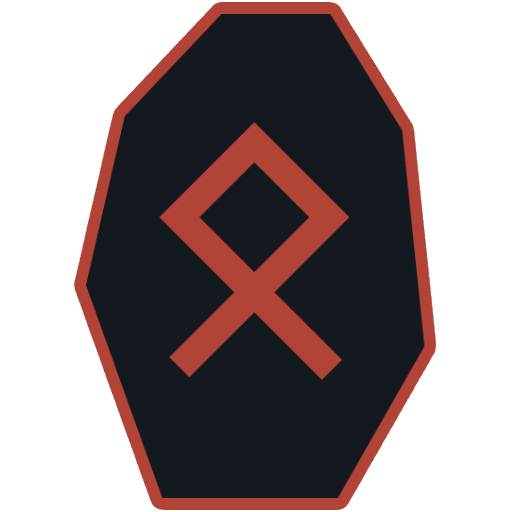
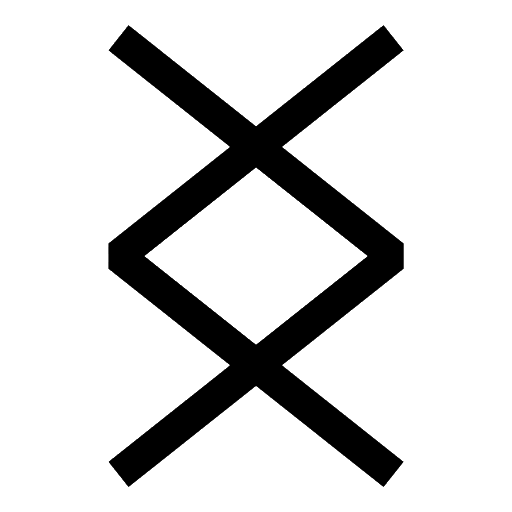
Three runes weave into a dance of creation — Ingwaz as the seed cradled in dark earth, Berkano as the nurturing mother who shelters, and Jera as the cycle that brings forth fruit. This fertility bind-rune is a vessel of potential, a promise of life’s unfurling.
The Components
Three runes, each carrying its own thread into the bind.
A bind-rune is a composite glyph formed by layering multiple Elder Futhark runes, each contributing its essence to create a unified intention. This ancient practice appears in talismans, carvings, and everyday objects from the Viking era and continues today. By combining runes, the bind-rune amplifies their individual powers into a single potent sign, designed to focus a specific energy or purpose.
The fertility bind-rune offered here intricately intertwines Ingwaz, Berkano, and Jera — runes steeped in the energies of creation and growth. Ingwaz holds the seed of potential, Berkano nurtures this potential into being, and Jera completes the cycle, ensuring that endeavours bear fruit. Together, they symbolize the full arc of life’s generative processes.
Why These Runes
Ingwaz is the seed — the silent promise of what will come, cradled in its resting phase. Fertility begins with this rune, as it holds the latent potential that, under the right conditions, will burst forth into life. In fertility workings, Ingwaz is the harbinger of beginnings, representing both the readiness to start and the patience to wait for the right season.
Berkano is the mother and the birch tree, a symbol of nurturing growth and protection. This rune embodies the lush, verdant growth that occurs under careful guardianship. In a fertility bind, Berkano's presence ensures that whatever Ingwaz germinates is lovingly nurtured to maturity. It is the womb, the fertile earth where seeds take root and are shielded until they are strong enough to stand on their own.
Jera represents the harvest, the fruition of efforts, the reward that follows a cycle's completion. In this fertility bind-rune, Jera stands as the promise that the planted seed and nurtured growth will eventually bear fruit. It reminds us that fertility is cyclic, that what begins in potential ends in a new beginning, and it ensures continuity and the sustainability of the cycle.
How to Use the Fertility Bind Rune
A fertility bind-rune is an active creation — it shapes and channels energies toward growth and potential. Engage with it intentionally, through traditional craft and practice.
Draw it. Ink the bind on paper or linen, a surface that breathes. Place it in a place of reverence — an altar, a garden.
Carve it. Engrave the bind on a wooden charm or a piece of bone. Place it near the soil or in proximity to where life is nurtured.
Wear it. Adorn yourself with the bind as jewelry, close to your skin. Let it harmonize with your personal rhythms.
Place it. Position the bind in spaces of new beginnings — a nursery, a garden plot, the hearth of a home.
Trace it. With finger or breath, draw the bind in the air over seeds planted, or a belly carrying new life.
In all these methods, infuse the bind with your fertile intention as you create it. Visualize the life you wish to nurture, and name it clearly in your heart.
Make Your Own Variation
This bind serves as a foundational touchstone for fertility workings, but every situation births its own needs. Follow these steps to personalize your bind:
Define your intention. Is it physical fertility, abundance in creativity, or the growth of a new project or relationship?
Select relevant runes. Ingwaz and Berkano are core here; pair with others like Fehu for wealth, or Laguz for the flow of life.
Overlay the lines elegantly. Align the stems and curves, finding synergy in the shapes to enhance the bind's cohesion.
Create it. Engage with your chosen materials, infusing them with your specific intent, and speak the names of the runes as you work.
Historical Context
Fertility bind-runes resonate with age-old practices where nature and the divine interlace. Old Norse cultures revered the cyclic nature of life and the earth’s fertility, celebrating it through rituals and symbols to ensure prosperity. The god Ing, whom the rune Ingwaz is named after, was honored as an ancestral fertility deity. The birch tree, symbolized by Berkano, was seen as the mother of the forest, and harvest cycles marked by Jera were crucial to survival and prosperity. These binds were inscribed on amulets, farm tools, and woven into garments, marking the essential intertwining of life’s sustenance with spiritual practice.
Frequently Asked
How do fertility bind-runes work?
By focusing intention and channeling energies toward creation and growth, a fertility bind-rune acts as a catalyst in the cycle of life. It aligns with natural processes and divine archetypes to facilitate and enhance the birth of new life or projects. The tradition considers the act of crafting the bind-rune as integral as the energy it emanates.
Can this bind-rune be used for non-physical fertility?
Absolutely. While rooted in the concept of physical fertility, this bind-rune's energies also support creativity, project development, and personal growth. The principles of gestation, nurturing, and harvest apply broadly, making it adaptable to various forms of ‘birthing’ in life.
Is it necessary to use all three runes?
These three runes provide a balanced perspective on fertility’s cycle, but you can adapt the bind to suit your needs. You might choose to emphasize specific aspects of fertility by incorporating runes like Fehu for abundance, or Sowilo for vitality. Consider which part of the cycle you are nurturing and adjust accordingly.
Can I create a fertility bind-rune on my body permanently?
Yes, many choose tattoos as a way to permanently carry the bind’s intention. Ensure the design reflects what you wish to manifest continuously, as its presence becomes a devoted reminder of the fertility and growth you seek to foster in your life.
A Free Rune Reading
Cast the Runes Behind This Bind
The Fertility bind layers Ingwaz, Berkano, and Jera. Cast a reading and see which of those runes — or which others — the Norns turn up.